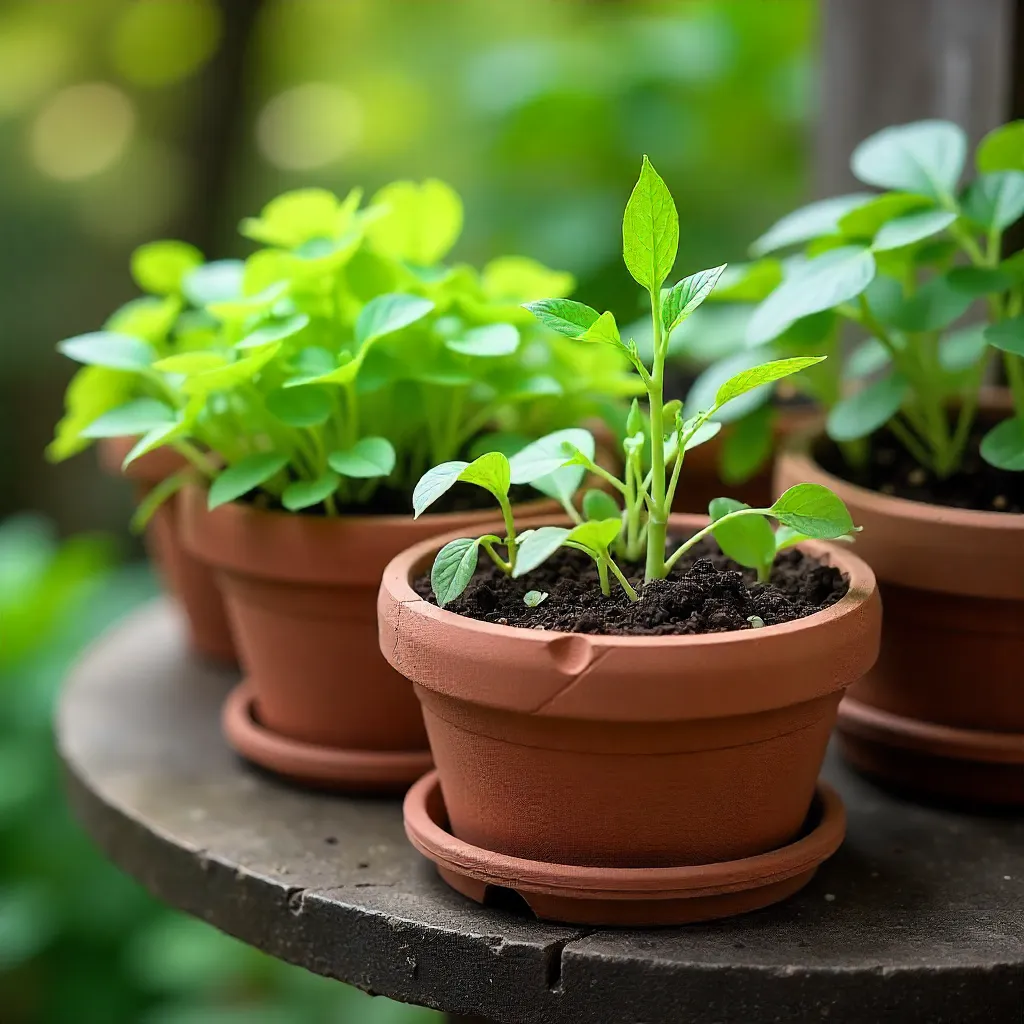
Understanding Container Porosity
Every container material has a unique relationship with water. Porosity determines how quickly moisture escapes through the container walls, affecting how often you need to water your plants. Think of your container as a second skin—it can either help retain moisture or allow it to evaporate rapidly.
Unglazed clay, wood, and stone each have distinct porosity characteristics. Understanding these differences helps you select the right container for your specific plants and watering preferences.
Material Comparison
Unglazed Clay
Highly porous material that allows water to escape through its walls. This creates a cooling effect but requires more frequent watering. The porous nature helps prevent overwatering by allowing excess moisture to evaporate.
Porosity Rate: High | Water Escape: Fast
Wood Containers
Moderate porosity that varies based on wood type and treatment. Cedar and redwood naturally resist moisture loss, while untreated pine allows more water to escape. Wood containers offer a balance between breathability and retention.
Porosity Rate: Medium | Water Escape: Moderate
Stone Containers
Low porosity material that retains water effectively. Stone containers minimize water loss through walls, creating a more stable moisture environment. However, they require careful drainage management to prevent waterlogging.
Porosity Rate: Low | Water Escape: Slow
Sealing the Ecosystem
If you prefer a porous container but want to reduce water loss, you can "seal" the ecosystem using natural methods. These techniques create a barrier that slows evaporation without completely eliminating the container's breathability.
Natural Wax Coating
Apply a thin layer of natural beeswax or carnauba wax to the interior walls of unglazed clay containers. This creates a semi-permeable barrier that reduces water loss while maintaining some breathability.
Internal Liners
Use biodegradable liners made from coconut coir or natural fiber mats. These liners create a moisture-retaining layer between the soil and container walls, slowing evaporation without affecting drainage.
Testing Porosity
You can test your container's porosity by filling it with water and observing how quickly it seeps through the walls. A highly porous container will show moisture on the exterior within minutes, while a less porous container may take hours or days.
Understanding your container's porosity helps you develop an appropriate watering schedule. High-porosity containers benefit from more frequent, smaller waterings, while low-porosity containers can handle less frequent but deeper waterings.